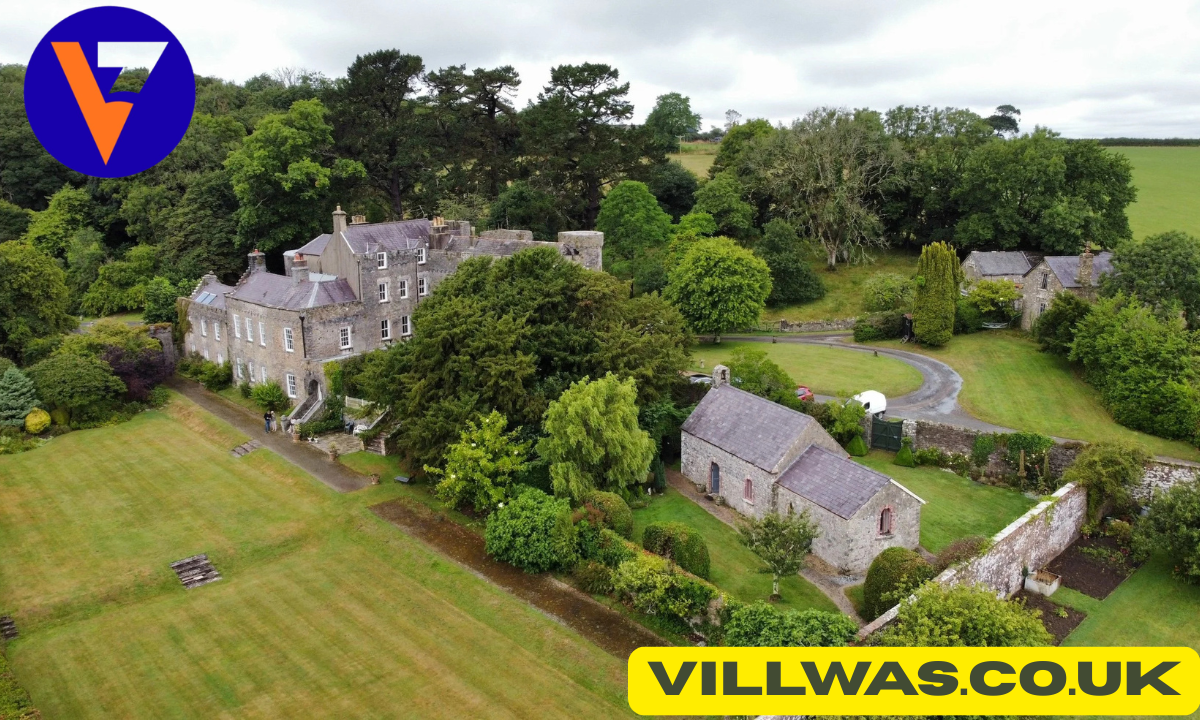
Castle Upton Estate Templepatrick is one of Northern Ireland’s most distinguished historic residences, combining centuries of architectural refinement with the charm of rural County Antrim. Set within picturesque countryside near Templepatrick, the estate has long been recognised as a landmark property. Its impressive façade, sweeping grounds and layered history make it a subject of interest for historians, property buyers and heritage enthusiasts alike.
The castle upton estate reflects the broader story of Ireland’s landed gentry, evolving from a powerful aristocratic seat into an exclusive modern residential setting. Over time, it has adapted to changing social and economic landscapes while preserving its historic integrity. Today, it stands not only as a private residence but also as a symbol of architectural endurance and cultural legacy within Northern Ireland.
Location and Surroundings in County Antrim
Situated approximately twelve miles north-west of Belfast, the estate enjoys a strategic yet peaceful location. Templepatrick is known for its village atmosphere, scenic countryside and accessibility, making it a desirable area for those seeking rural tranquillity without sacrificing convenience. The surrounding farmland and mature woodland enhance the estate’s secluded character, reinforcing its historic grandeur.
The castle upton estate benefits from excellent transport connections, including nearby motorways and Belfast International Airport. This accessibility has contributed to its continued relevance in the modern property market. Despite its proximity to urban centres, the estate retains a distinctly pastoral atmosphere, offering residents privacy and an enduring connection to the natural landscape of County Antrim.
Early Origins and Aristocratic Foundations
The origins of Castle Upton date back to the early seventeenth century, when a substantial house was first constructed on the site. Over time, the property became closely associated with the Upton family, later elevated to the title of Viscounts Templetown. Their stewardship played a central role in shaping the estate’s architectural development and regional influence.
Throughout the eighteenth and nineteenth centuries, the castle upton estate functioned as a prominent seat of political and social activity. The Upton family were influential figures, and their presence elevated the estate’s status within Irish aristocratic circles. This early history established the foundations for the property’s lasting reputation and significance within Northern Ireland’s heritage landscape.
Architectural Evolution and Design Heritage

The architectural story of the estate is marked by periods of refinement and expansion. In the eighteenth century, elements of classical design were introduced, with influence attributed to the renowned Scottish architect Robert Adam. His style brought symmetry, elegance and proportion, aligning the estate with contemporary tastes of the period.
Further alterations in the nineteenth century introduced neo-Elizabethan features and decorative flourishes, enhancing the building’s dramatic appearance. The castle upton estate today reflects this layered design history, where classical restraint meets Victorian embellishment. Such architectural diversity contributes to its distinctive character and explains why it remains one of the region’s most admired historic properties.
Twentieth Century Changes and Adaptation
Like many grand country houses, the estate faced significant changes during the twentieth century. Shifts in economic conditions and land ownership patterns led to the division and repurposing of parts of the property. These changes were part of a wider transformation affecting estates throughout Ireland and the United Kingdom.
The castle upton estate adapted by converting sections into agricultural and residential uses, ensuring its survival during uncertain times. Rather than falling into decline, the estate underwent careful restoration efforts. These initiatives preserved its architectural integrity while allowing it to remain functional and relevant within a modern context.
Modern Residential Development and Property Appeal
In recent decades, the estate has evolved into an exclusive residential development, featuring sensitively restored buildings and high-quality conversions. Properties such as courtyard homes and barn conversions blend original stonework with contemporary interiors. This careful balance between old and new enhances the estate’s prestige and appeal.
Demand for homes within the castle upton estate reflects a growing appreciation for heritage living. Buyers are drawn to the opportunity to reside within historic surroundings while enjoying modern comforts. The estate’s reputation, location and architectural character combine to create a distinctive property offering within the Northern Irish market.
Cultural and Heritage Importance
Beyond its residential function, Castle Upton holds deep cultural significance. It serves as a tangible reminder of Northern Ireland’s aristocratic past and the architectural achievements associated with country estates. The preservation of such properties contributes to the region’s broader historical narrative and identity.
The castle upton estate also reinforces Templepatrick’s heritage status, enhancing the village’s profile within County Antrim. Its continued maintenance and conservation reflect a commitment to safeguarding important landmarks. As a result, the estate remains not only a private residence but also an enduring symbol of local pride and historical continuity.
Comparison with Other Historic Estates
It is important to distinguish Castle Upton from similarly named properties elsewhere in the United Kingdom. For example, Upton House and Gardens in England is a separate estate with its own distinct history and management. Confusion sometimes arises due to the similarity in names.
The castle upton estate in Templepatrick is unique in its Irish context, shaped by the Upton family’s legacy and the political landscape of County Antrim. Understanding this distinction ensures clarity for researchers, visitors and property seekers. Each estate carries its own narrative, architectural identity and cultural significance.
Visiting and Public Access Considerations
Unlike publicly managed heritage sites, Castle Upton is primarily a private estate and not generally open to casual visitors. Respect for residents’ privacy is essential, as the property functions as a living community rather than a tourist attraction. Nevertheless, its presence enriches the surrounding landscape.
The castle upton estate can be appreciated from nearby roads and countryside viewpoints, offering glimpses of its impressive architecture. Its setting within Templepatrick adds to the scenic appeal of the area. While access may be limited, its influence on the local environment and heritage remains unmistakable.
Conclusion
Castle Upton Estate Templepatrick stands as a remarkable example of historical resilience and architectural evolution. From its seventeenth-century origins through aristocratic prominence to modern residential adaptation, it has continually responded to changing times while retaining its essential character.
Today, the castle upton estate represents both heritage and opportunity, blending tradition with contemporary living. Its layered history, elegant design and prestigious location ensure that it remains one of County Antrim’s most notable estates. For those interested in Northern Ireland’s country houses, it offers a compelling and enduring story.
Frequently Asked Questions
Who owns Castle Upton Estate today?
The castle upton estate is privately owned and managed by modern residential owners.
Where is Castle Upton Estate located?
Castle Upton estate is in Templepatrick, County Antrim, Northern Ireland.
Is Castle Upton Estate open to the public?
No, the castle upton estate is primarily a private residential property.
When was Castle Upton Estate built?
The estate dates back to the early 17th century.
What architectural style is Castle Upton Estate?
It features a mix of classical, neo-Elizabethan, and Victorian design elements.
Are there properties for sale at Castle Upton Estate?
Yes, some restored barns and courtyard homes are available for purchase.
Is Castle Upton Estate a listed building?
Parts of the castle upton estate are Grade-listed for historical and architectural importance.
What is the difference between Castle Upton and Upton House in Warwickshire?
Castle Upton estate is in Northern Ireland, while Upton House is a National Trust property in England.